

Introduction
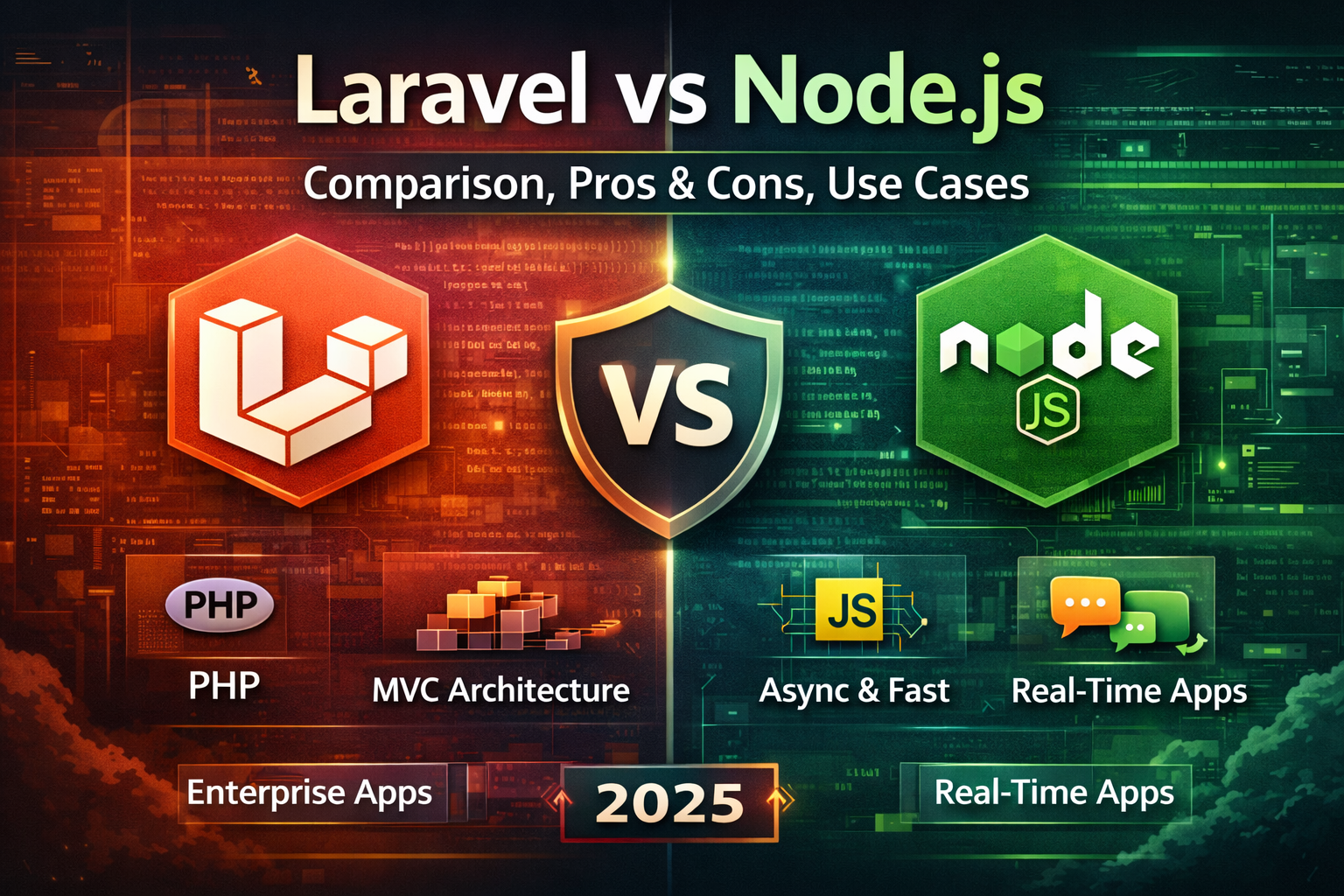
Laravel is a modern, open-source PHP framework designed to simplify and accelerate web application development. Built on the MVC (Model–View–Controller) architectural pattern, Laravel helps developers write clean, structured, and maintainable code. It handles common backend tasks such as routing, authentication, sessions, caching, and database operations efficiently.
Due to its elegant syntax, strong security, and extensive ecosystem, Laravel has become one of the most widely used PHP frameworks in 2025. It is trusted by startups, enterprises, and freelance developers for building scalable and high-performance web applications.
Key Features of Laravel
- MVC Architecture: Separates business logic, database, and UI, making applications easier to maintain and scale.
- Elegant Syntax: Clean and readable syntax improves developer productivity.
- Built-in Authentication: Ready-made authentication system reduces development effort.
- Powerful Routing: Supports RESTful routing with middleware and route grouping.
- Eloquent ORM: Simplifies database operations using object-oriented syntax.
- Blade Templating: Lightweight and secure templating engine.
Laravel Code Examples
1. Basic Route Example
Laravel routing allows you to define application URLs easily:
Route::get('/welcome', function () { return view('welcome');});This route displays the welcome.blade.php view when the user visits /welcome.
2. Controller Example
Controllers help keep your business logic organized:
php artisan make:controller UserControllerclass UserController extends Controller{ public function index() { return "User List Page"; }}Controller-based architecture improves code readability and scalability.
3. Eloquent ORM Example
Eloquent ORM allows database interaction without writing complex SQL queries:
$users = User::where('status', 'active')->get();This query fetches all active users from the database using clean, expressive syntax.
4. Blade Template Example
Blade makes frontend development easy and reusable:
Welcome, {{ $name }}
@if($isAdmin) You are an Admin
@endifAdvantages of Laravel
- Rapid Development: Built-in tools reduce development time.
- High Security: Protects against SQL Injection, CSRF, and XSS.
- Scalability: Ideal for both small and enterprise-level projects.
- Maintainable Code: Clean architecture ensures long-term support.
- Strong Community: Extensive documentation and third-party packages.
Applications of Laravel
- Dynamic websites and web applications
- ERP, CRM, HRMS systems
- RESTful APIs and backend services
- E-commerce platforms
- SaaS and subscription-based applications
Best Practices for Laravel Development
- Follow MVC strictly
- Use Form Request Validation
- Secure routes with middleware
- Store credentials in
.env - Write unit and feature tests
Conclusion
Laravel has transformed PHP development by providing a powerful, secure, and developer-friendly framework. In 2025, Laravel remains the top choice for modern PHP applications due to its scalability, performance, and rich ecosystem.
Whether you are a beginner learning backend development or an experienced developer building enterprise-grade systems, Laravel provides all the tools needed to deliver high-quality applications efficiently.



Discussion (0)
Leave a comment